How to Choose Newborn Outfits for Photography
The smallest details often shape the final portrait more than parents expect. A beautiful pose and soft light matter, but newborn outfits for photography can quietly set the entire tone – delicate and airy, modern and minimal, or overly busy in a way that pulls attention from your baby’s face. When the goal is imagery that feels refined and timeless, wardrobe deserves just as much thought as the backdrop or props.
For parents, that usually means choosing pieces that feel gentle, elevated, and comfortable. For photographers, it means selecting styling elements that support a clean frame and a consistent visual brand. In both cases, the best outfit is rarely the one with the most detail. It is the one that photographs with grace.
What makes newborn outfits for photography work
The strongest styling choices tend to look effortless, but they are rarely accidental. Soft texture, flattering fit, and a restrained color palette do most of the work. A well-chosen outfit should complement the baby rather than compete for attention.
This is where many store-bought baby clothes fall short. Everyday infant clothing is made for practicality, which makes sense for daily life, but photography asks for something different. Snaps, bright graphics, stiff waistbands, oversized ruffles, and cartoon prints can interrupt an otherwise elegant portrait. Even pieces that look sweet in person may feel distracting once they are framed and enlarged.
A photography outfit should support the mood of the image. If the vision is fine art inspired, the outfit needs softness and simplicity. If the portrait is meant to feel organic and intimate, breathable fabrics and natural tones usually photograph better than saturated color or novelty designs. The goal is not to make the baby look dressed up for the sake of dressing up. The goal is to create a polished image that still feels tender and true.
Start with fabric before color
Most people begin by choosing a color, but fabric is often the more important decision. Texture has a major effect on how an image feels. Knit layers, stretch jersey, ribbed cotton, mohair, and delicate lace can add dimension without overwhelming the frame. They catch light softly and create visual depth, especially in close-up portraits.
Stiffer fabrics tend to bunch, wrinkle sharply, or sit awkwardly around a baby’s body. That can create bulk where you want softness. Babies are tiny, and heavy construction can make the outfit look oversized or uncomfortable. Lightweight materials with gentle stretch are usually easier to style and more flattering on camera.
Comfort matters here too. If a baby feels restricted, it can affect the flow of the portrait experience. Outfits that are soft against the skin and easy to slip on and off allow for smoother transitions and a calmer baby. That practical detail often leads to better images.
The best colors are usually the quiet ones
Color has emotional weight in portraiture. Cream, ivory, oatmeal, blush, dusty rose, soft taupe, muted sage, and light gray tend to photograph beautifully because they reflect light gently and keep the overall image calm. These shades also pair well with a minimal, fine art aesthetic.
Bright red, neon pink, bold royal blue, and harsh black can be more difficult. That does not mean they never work, but they often pull attention away from the baby’s skin tone and expression. Strong color casts can also affect the look of the final portrait, especially in close-up images where subtle tones matter.
White can be beautiful, but not every white is equal. A soft ivory or warm cream often feels more flattering and dimensional than a stark optic white. The difference is subtle, yet it can completely change how polished the portrait feels.
Fit should feel gentle, not oversized
One of the most common styling mistakes is choosing an outfit based on size labels alone. Newborn sizing varies widely, and many baby pieces are designed with extra room for comfort or growth. In portraits, too much extra fabric can swallow a baby’s form and create unnecessary folds.
A better approach is to choose pieces that skim the body lightly. You want enough softness to keep the image natural, but not so much volume that the baby disappears inside the garment. This is especially important for rompers, wraps, knit sets, and bonnet pairings.
Tiny details matter. Sleeves that are too long can hide hands. A neckline that sits too high can shorten the neck in the frame. Diaper covers that bunch awkwardly may distract in more minimal setups. When the fit is right, the outfit looks intentional rather than improvised.
Why simple styling looks more expensive
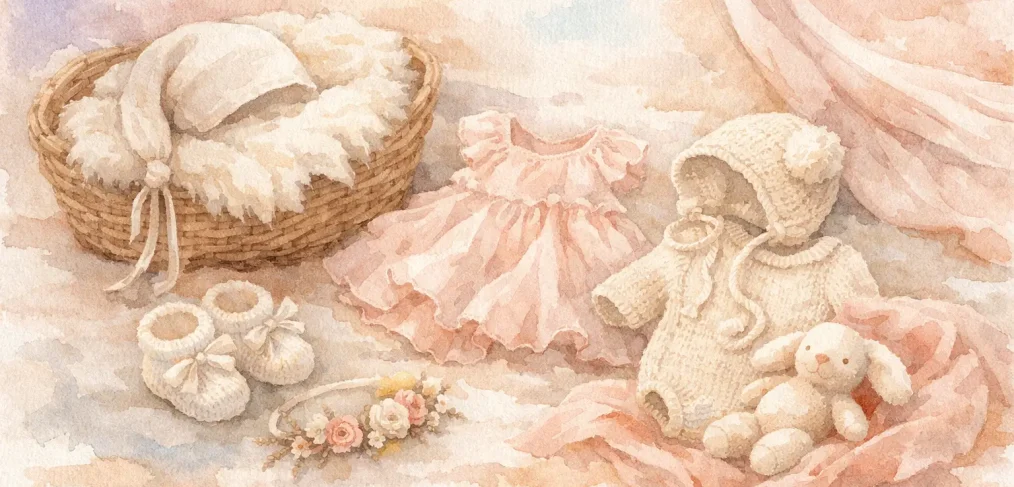
Luxury in portraiture is often about restraint. The most elevated newborn outfits for photography are usually the simplest ones – a knit romper with a bonnet, a soft wrap in a tonal neutral, a delicate lace layer, or a minimal set with subtle texture. These choices feel timeless because they are not tied to a passing trend.
Too many design elements in one outfit can quickly date the image. Large bows, glitter accents, loud patterns, and excessive embellishment may feel cute in the moment, but they rarely create the heirloom quality most families want from professional portraits. If your goal is artwork that still feels beautiful years from now, simplicity is often the stronger choice.
That does not mean every portrait needs to be plain. Texture, shape, and carefully chosen accessories can still bring personality. The difference is balance. One lovely detail is memorable. Five competing details create noise.
Accessories should support the portrait, not take over
A bonnet, tieback, swaddle, or headband can add softness and variety, but these pieces work best when they remain secondary. The eye should always return to the baby first.
This is especially true with oversized bows or statement accessories. They may seem charming in a product photo, yet in a finished portrait they can dominate the frame. A more delicate accessory tends to age better and feel more refined.
Layering can also help create visual interest without excess. A simple romper with a textured wrap or a neutral knit set with a subtle bonnet often gives enough variation while keeping the portrait cohesive. The styling feels complete, but never forced.
Matching the outfit to the set matters
An outfit does not exist on its own. It interacts with background color, fabric layers, props, and lighting. That is why the same piece can look beautiful in one setup and flat in another.
If the set is light and airy, tonal neutrals usually blend beautifully and keep the image soft. If the background has more depth or shadow, a slightly lighter outfit can help separate the baby from the scene. Texture becomes especially important in monochromatic styling because it creates dimension without requiring more color.
This is also where a curated wardrobe makes a difference. When outfits are chosen with the overall portrait design in mind, everything feels intentional. That polished look is what turns a nice photo into artwork.
For photographers, curation is part of your brand
If you offer wardrobe options in studio or through an online shop, your outfit selection speaks before you do. It tells clients whether your style leans whimsical, traditional, minimalist, or fine art. A carefully edited collection creates trust because it shows discernment.
That does not mean stocking every trend. In fact, a smaller, well-curated selection often feels more premium. Focus on pieces that photograph consistently well, flatter a range of babies, and align with your editing style. Soft neutrals, timeless textures, and versatile silhouettes are usually the strongest investment.
For a modern portrait brand, the wardrobe should feel cohesive from piece to piece. If every outfit has a different color story or aesthetic, the collection can feel random. A more selective approach elevates the client experience and helps maintain a recognizable visual identity.
A few things are worth avoiding
Some styling choices create challenges that are easy to prevent. Large printed graphics, visible brand logos, stiff tutus, shiny satin, and high-contrast patterns can all become distractions. Outfits with too many closures or complicated layers can also make styling slower and less comfortable for the baby.
Seasonal themes are another area where it depends on your goals. They can be sweet and fun, but they are usually less timeless. If a family wants portraits that feel classic on the wall year-round, softer and less literal styling is often the better fit.
Even sentimental clothing may not always photograph well. A family heirloom can be meaningful, but if the fit is awkward or the fabric is visually heavy, it may work better as a detail portrait rather than the main outfit.
Choosing pieces that age beautifully
The most successful portraits tend to share one quality: they feel as beautiful later as they did on the day they were created. That is why timeless styling matters. Gentle color, soft fabric, and thoughtful fit create room for emotion to lead the image.
Whether you are a parent selecting a special piece or a photographer building a studio wardrobe, it helps to ask one simple question: will this outfit still feel elegant when I look back at these portraits years from now? If the answer is yes, you are likely choosing well.
Beautiful portrait styling does not need to be elaborate to feel special. Often, the quietest piece in the room is the one that lets love, tenderness, and newness shine most clearly.